Let imagine the normal situation: A pharmaceutical company ships a batch of medicine. Somewhere between the factory, the distributor, the warehouse, and the hospital, a question appears: who handled it, when, and can we prove that nothing changed?
The questions above are more important than the word “blockchain”.
Blockchain becomes useful when several organizations need to share a record, but do not want one participant to have complete control over it. Instead of each company keeping a separate version of the truth, the participants can use a shared ledger whose entries are cryptographically linked and difficult to alter without detection. The GAO, U.S. Government Accountability Office, describes blockchain as a way for multiple parties to maintain a trusted, tamper-resistant record without depending entirely on a central authority.
The technology isn’t a magic replacement for databases. In some situations, it is slower, more expensive, and unnecessarily complicated. But when the real problem is fragmented trust, blockchain can become a powerful business tool.
The Hidden Cost of Not Trusting the Record
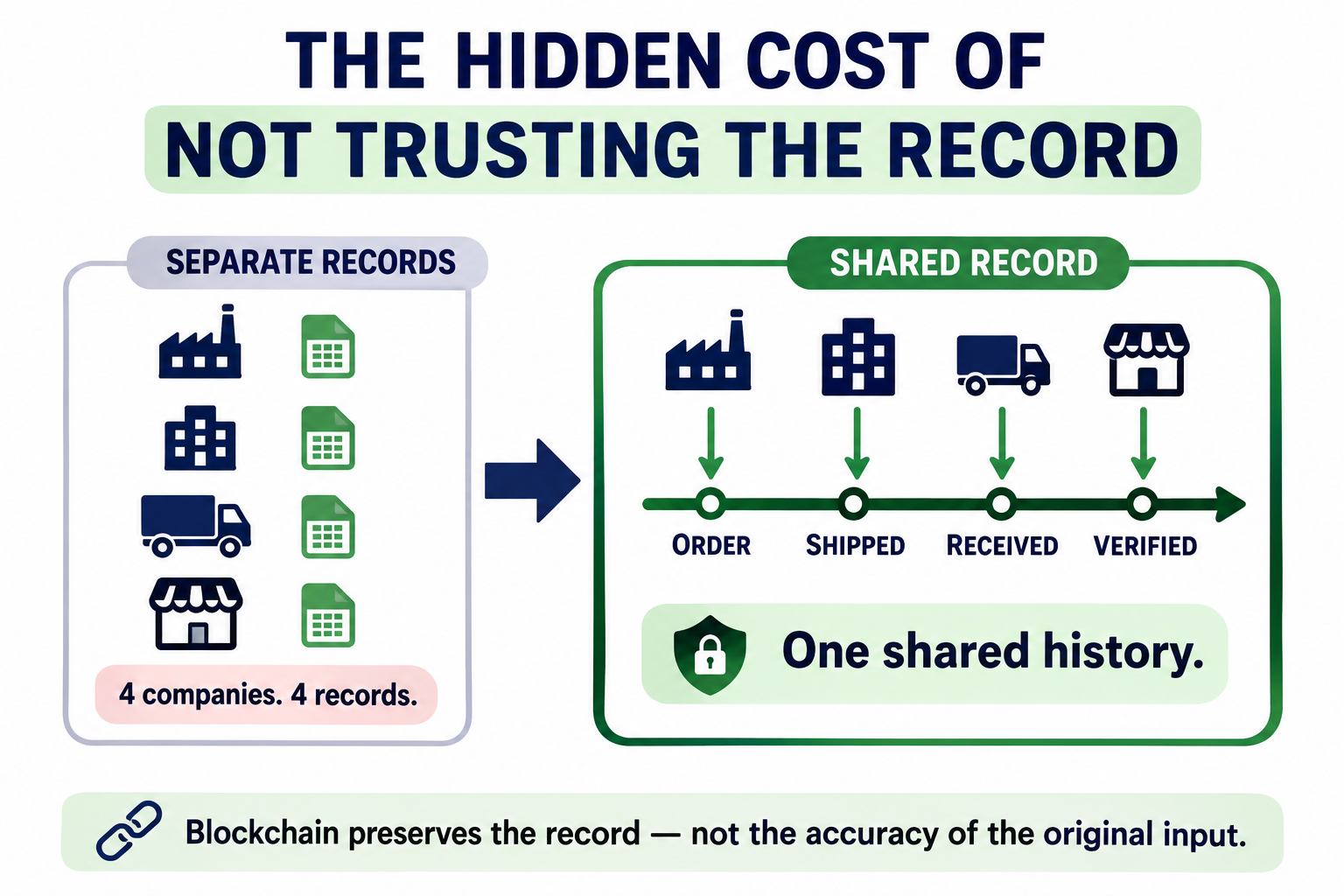
Although it doesn’t automatically prove that the original information was true, it makes later manipulation much harder to hide. Blockchain can create a shared audit trail: a chronological record of events that the authorized participants can inspect. That distinction is crucial. Blockchain can preserve the history of a record; it cannot guarantee that an employee did not enter false information at the beginning.
This is why reliable data capture, identity management, sensors, audits, and governance remain essential.
Healthcare: Tracing a Medicine Before It Reaches a Patient
Healthcare is one of the most compelling fields because the consequences of bad information can be serious, and medical products often cross borders and pass through manufacturers, distributors, warehouses, pharmacies, and hospitals. The WHO, World Health Organization, says traceability systems can improve the integrity and efficiency of medical-product supply chains, support earlier detection of falsified products, and help identify shortages.
The interesting point is that blockchain does not need to store a patient’s entire medical file. In fact, putting sensitive personal information directly on an immutable ledger may create privacy problems. A better architecture may keep clinical data in a protected database while placing only proofs, permissions, or references on the blockchain.
That is one of the least understood aspects of blockchain:
The strongest design is often not “everything on chain”. It’s a hybrid system that keeps sensitive data private while using the ledger to prove integrity and access history.
Finance: Fewer Reconciliations, Clearer Responsibility
Financial institutions already operate sophisticated databases, so blockchain’ potential is strongest where several institutions must coordinate transactions, documents, collateral, or settlement.
Recent developments suggest that blockchain is increasingly moving from experimentation into financial infrastructure. In August 2026, Circle announced that more than 100 institutional and ecosystem participants were building around its Arc blockchain. Financial organisations including BlackRock, BNY, DTCC and Standard Chartered are exploring integrations involving tokenised assets, custody, stablecoin access and settlement infrastructure. The lesson for businesses is not that every financial process should move on-chain. It is that blockchain becomes more relevant when multiple institutions need to coordinate value, identity and settlement across organisational boundaries.
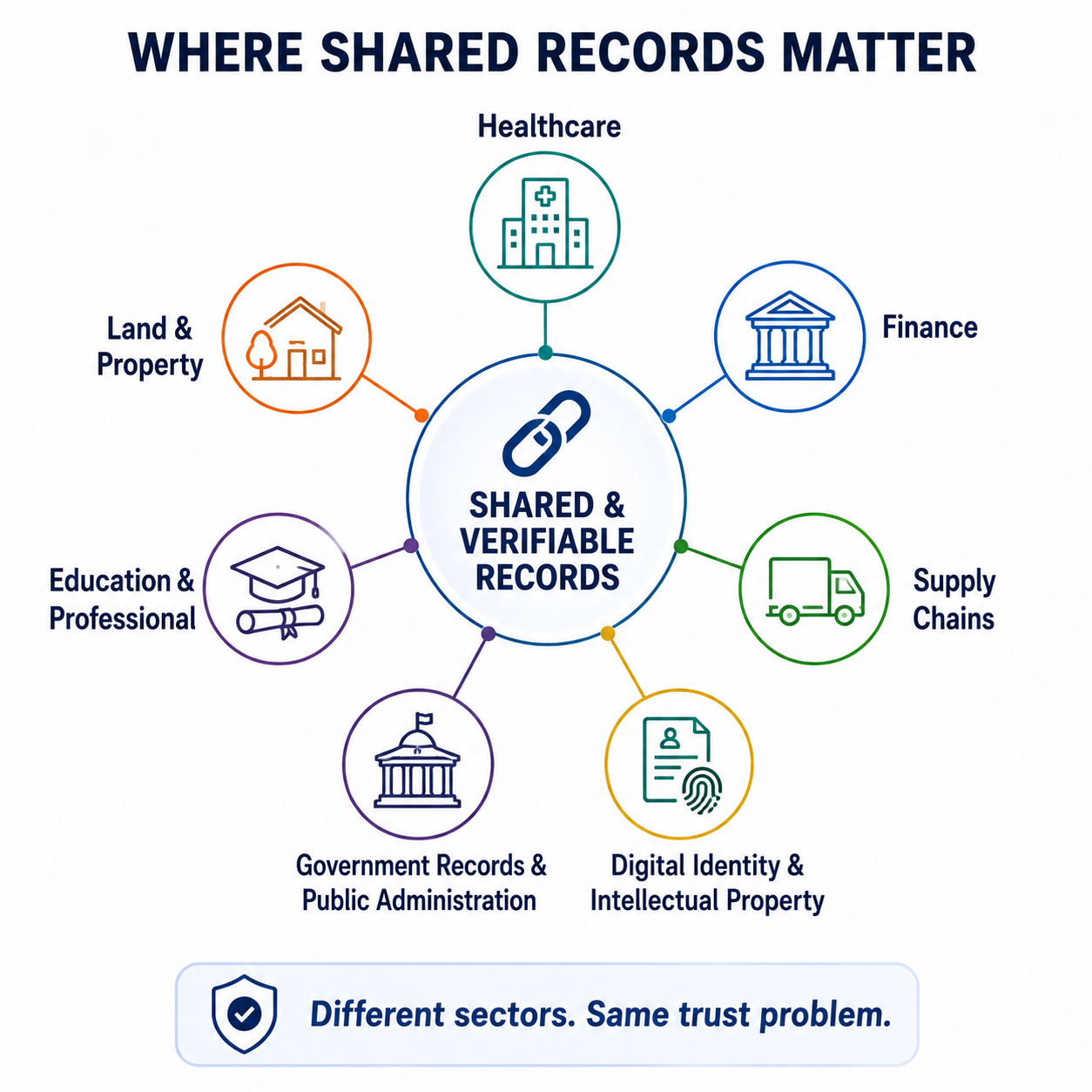
Supply Chains: Proving Origin, Not Just Telling a Story
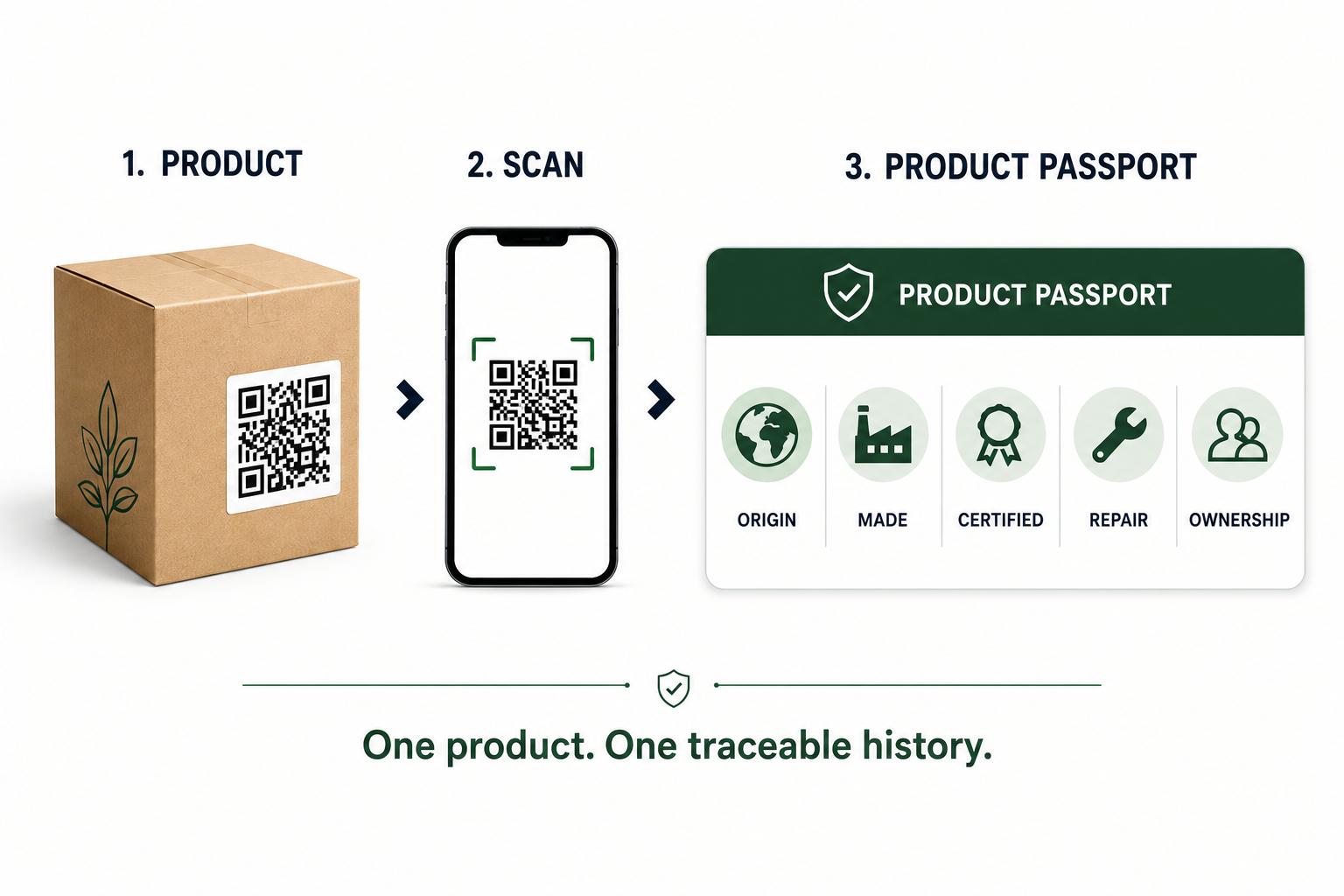
As generations change and scams become increasingly widespread, consumers increasingly want to know where products come from. Is the coffee ethically sourced? Was the medicine stored correctly? Is the luxury product authentic? Are sustainability claims supported by evidence?
This creates a commercial opportunity for manufacturers and exporters. A product could carry a digital identity that links to its material origin, repair history, recycling information, or ownership record. But there is a warning: a blockchain cannot distinguish between an honest certification and a false certification if the information entered into the system is unreliable. The value comes from combining the ledger with verified identities, audits, trusted data sources, and clear accountability
Land and Property: Making Records Easier to Verify
Property transactions are vulnerable to missing documents, conflicting records, fraud, and slow verification. Blockchain-based land registries have been explored because ownership transfers create a clear sequence of events that can be recorded and inspected.
However, the World Bank also warns that blockchain isn’t a quick solution to poor land governance. If the underlying records are incorrect or the legal authority is unclear, placing those records on a blockchain does not make them true. The real opportunity isn’t simply “put land records on blockchain”. It’s to connect verified identity, legal authority, document management, payment, and ownership transfer into one reliable process.
Education and Professional Credentials
Nowadays, degrees and professional certificates are often checked manually. Employers, universities, and licensing bodies may need to contact the issuing organization before accepting a document.
However, the difficult part is adoption. A credential has value only if employers, universities, regulators, and other relevant institutions accept the verification method.
Government Records and Public Administration
Public administration contains many processes where transparency and record integrity matter: permits, licences, benefits, procurement, certificates, and registries.A shared ledger could create a visible history of approvals and transfers, making it harder to quietly alter a record after the fact. It might also reduce repeated verification between departments. It also could increase the efficiency.
Digital Identity and Intellectual Property
Blockchain may also support verifiable identity and ownership claims. For example, a company could prove that a supplier is the same legal entity across different platforms; a creator could register the existence and provenance of a digital work; a manufacturer could verify that a component came from an approved supplier and so on.
When Blockchain Is the Wrong Choice?
The most useful blockchain decision may be deciding not to use it.
Then how do we determine whether we should use blockchain or a traditional database?
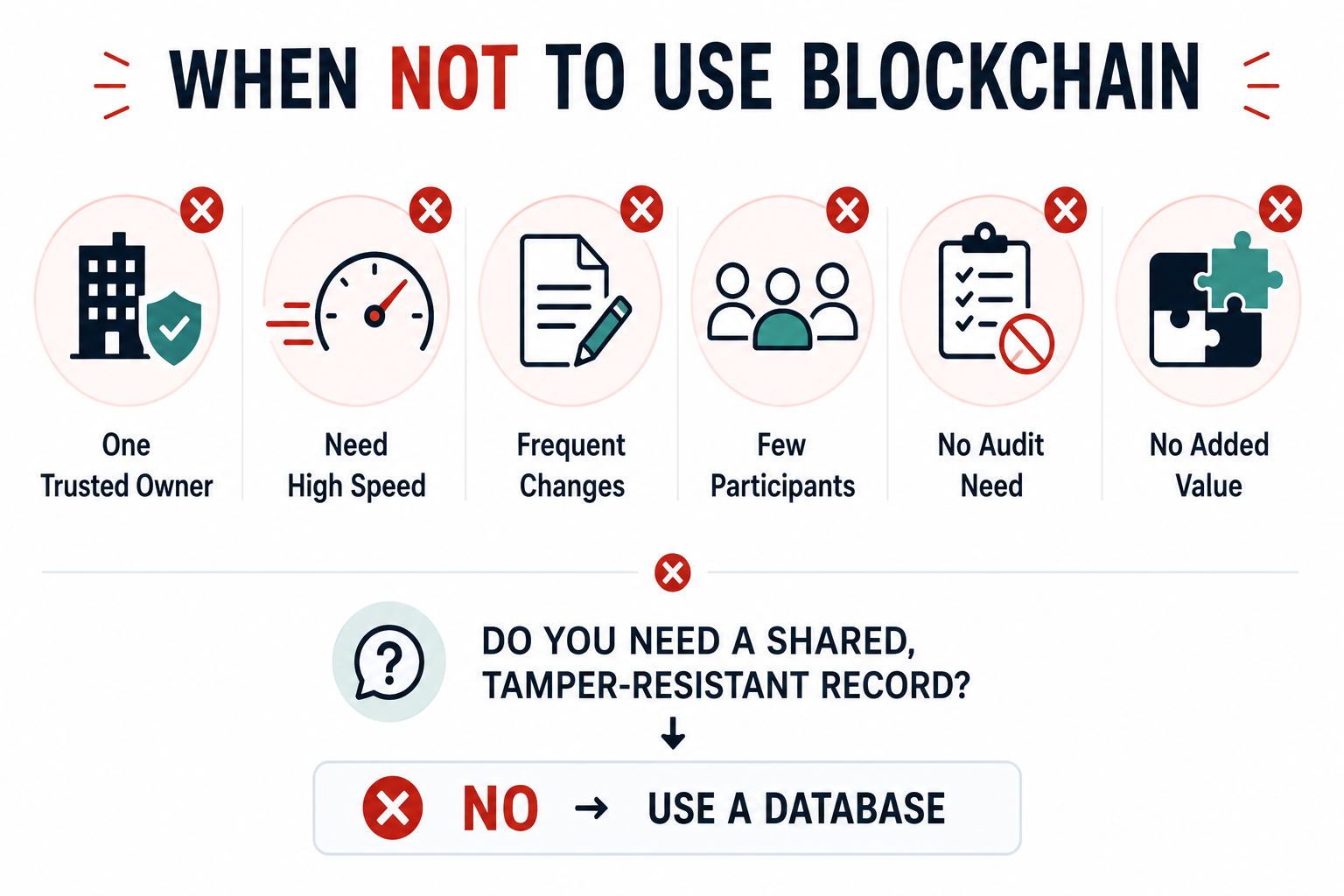
TA traditional database is probably better when one organisation already has legitimate control over the data, transactions must be extremely fast, records need frequent deletion or modification, there are very few participants, no one needs an independent audit trail, and the proposed blockchain adds complexity without reducing cost or risk. Another useful test is “Do several independent parties need to write to the same record, and do they need proof that no participant can quietly rewrite history?” If the answer is no, blockchain may not be the right investment. Not sure whether blockchain is the right fit for your business? Adxania can help you assess the use case, technical requirements, risks, and expected business value before you invest in development.
Look for more detail of blockchain service
What implementation really involves?
Next question is if the enterprise needs to use blockchain, then what should I do to imply it?
Actually, a serious blockchain project isn’t just a ledger. It normally involves identity and permission management, APIs connecting existing business systems, smart-contract development, cybersecurity testing, privacy and data-classification design, governance between participating organizations, regulatory and legal analysis, and monitoring, maintenance, and recovery procedures.
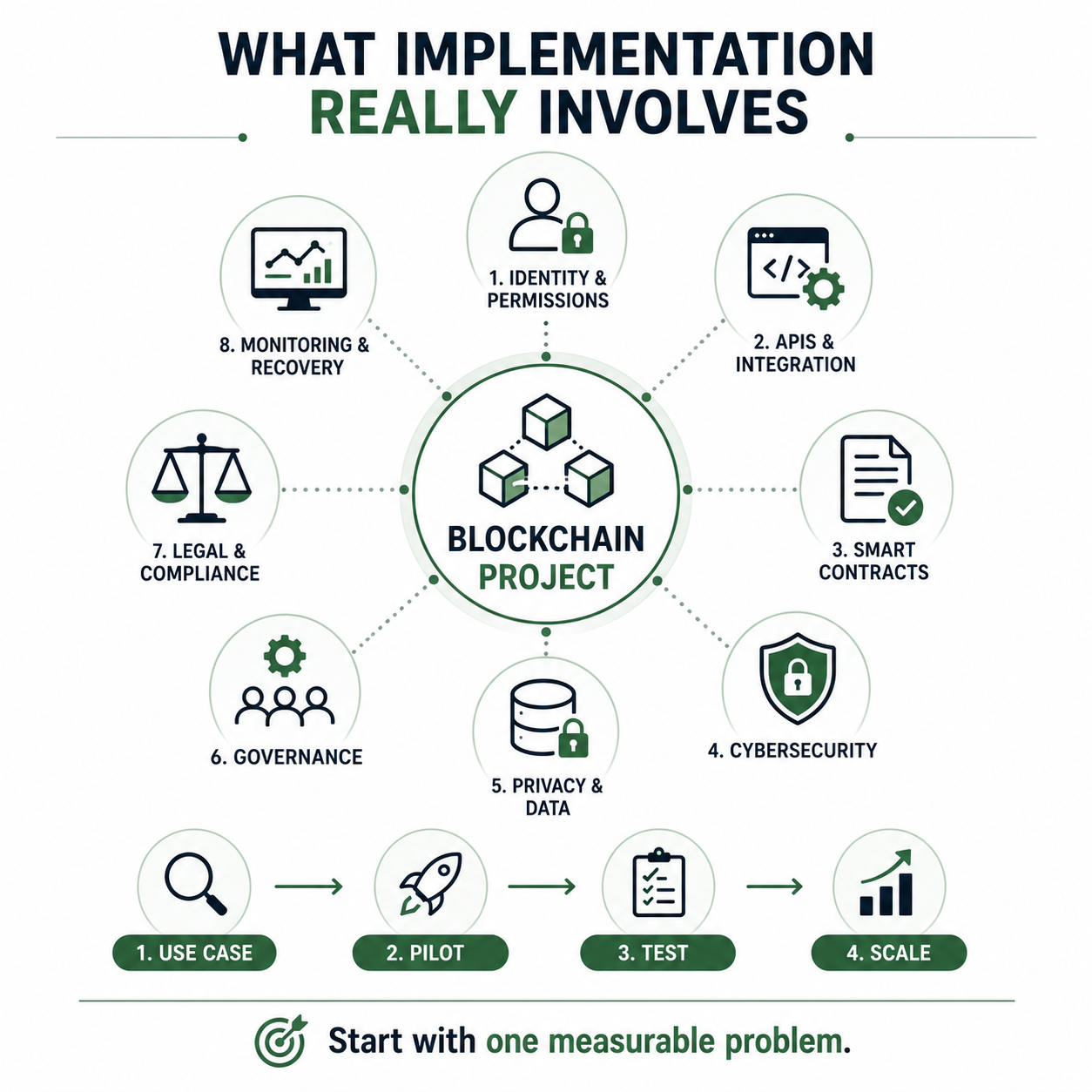
This is why the strongest projects begin with a controlled use case rather than a grand transformation programme. Start with one process where delays, disputes, fraud, or reconciliation costs are measurable. Build a pilot. Define who can write data, who can read it, what happens when something is wrong, and how success will be measured.
Build the Right System, Not the Loudest one
After building the blockchain, how can we know whether it actually helps? As we mentioned in the previous article, investors are increasingly looking for a clear ROI, Return on Investment, rather than simply investing in new technologies for the sake of innovation. Blockchain should earn its place by delivering measurable business results, such as reducing the time spent reconciling records, enabling faster settlement, lowering fraud exposure, improving traceability, or making possible a service that was previously difficult or impossible to coordinate.
Blockchain is often presented as a revolution.The more interesting truth is quieter: its value appears when trust is expensive.
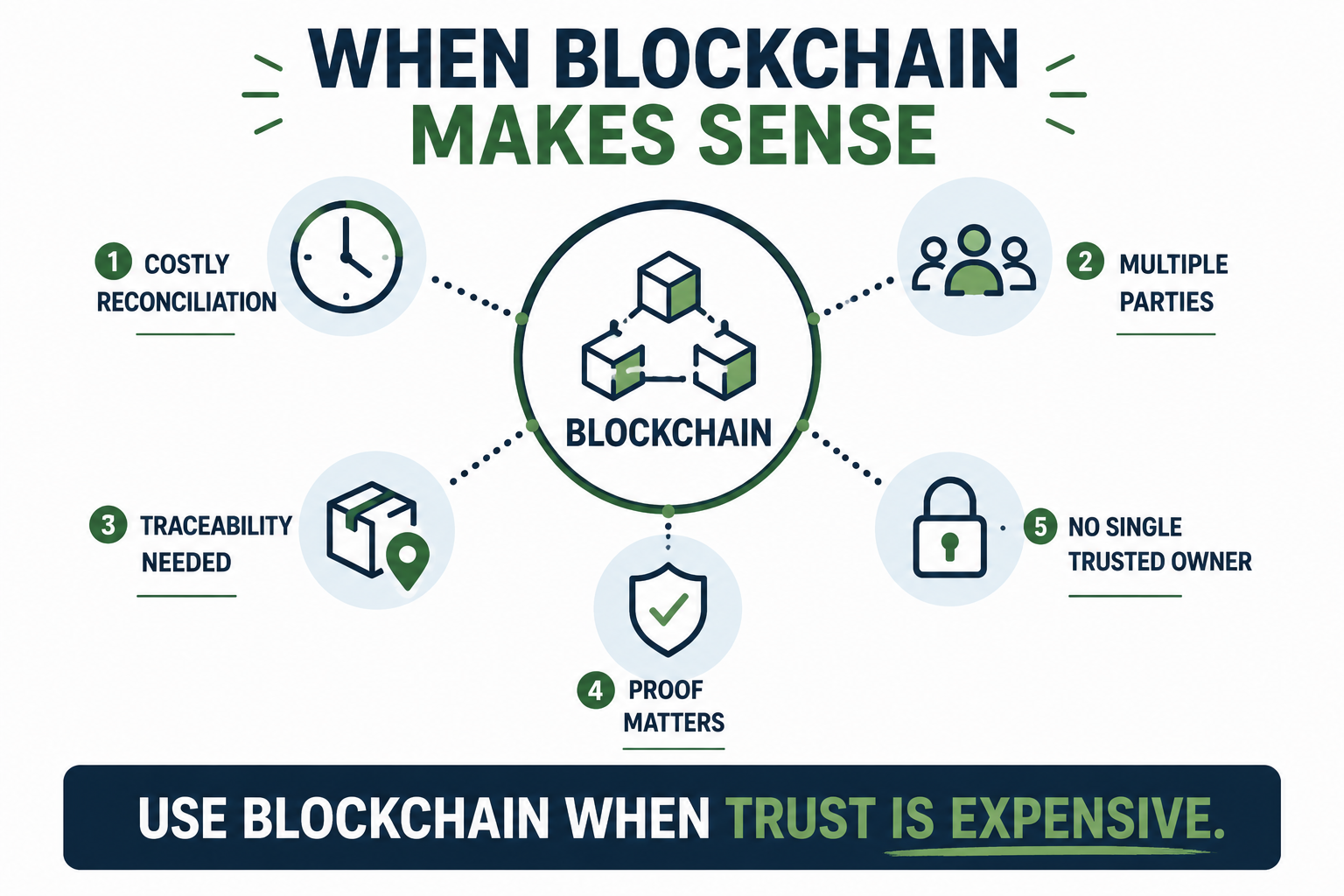
If your company is losing time because partners maintain conflicting records, if customers need proof of origin, if a supply chain requires traceability, or if several institutions must coordinate without handing complete control to one party, blockchain may offer a practical advantage.
What a good news is Adxania can help turn that possibility into an implementable system. We can analyse the business process, decide whether blockchain is genuinely appropriate, design the architecture, connect it with existing software, develop secure applications and smart contracts, and build the user-facing web or mobile experience around it. Just as importantly, don’t invest in blockchain because it sounds futuristic. Invest when it can make your operations more transparent, verifiable, efficient, and valuable. Adxania can help you identify that opportunity and build the technology to capture it.